
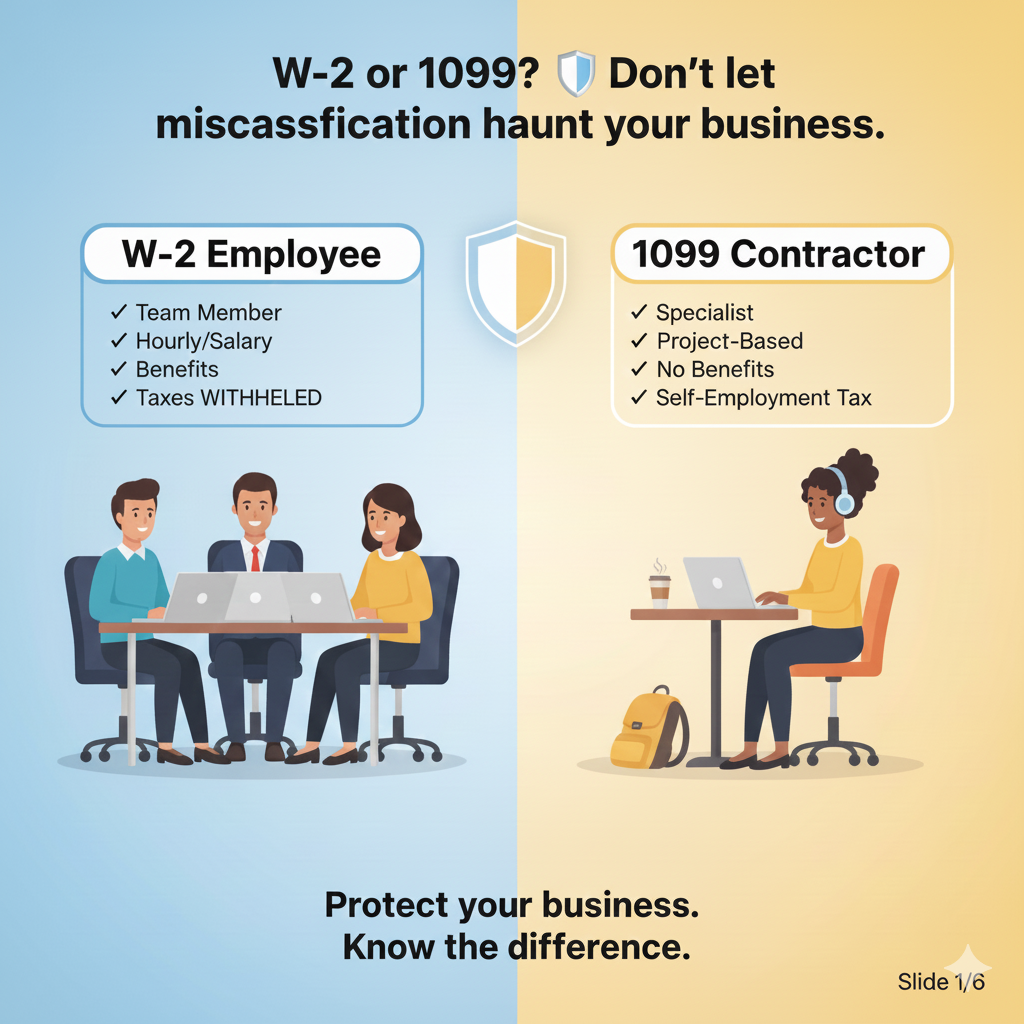
Choosing the right classification isn’t just about preference—it’s about compliance. Here’s the breakdown:
W-2 Employee (The Team Member)
- Control: You decide when, where, and how they work.
- Taxes: You withhold income tax and pay half of their FICA (Social Security/Medicare).
- Benefits: Usually eligible for health insurance, 401(k), and PTO.
- Tools: You provide the laptop, the software, and the desk.
1099 Contractor (The Specialist)
- Control: They set their own hours and use their own methods to get the job done.
- Taxes: They handle 100% of their own taxes (self-employment tax).
- Benefits: They manage their own insurance and retirement.
- Tools: They bring their own equipment to the table.
Bottom line: W-2s are for long-term growth and culture; 1099s are for specialized projects and flexibility.
A few reminders:
- Form 1099-NEC: This is the specific form used for non-employee compensation.
- The $600 Rule: If you pay a contractor $600 or more in a year, a 1099-NEC is required.
- 2026 Update: In 2026, some thresholds and deadlines may shift (like the 1099-NEC being due by February 2nd if the 31st falls on a weekend).
#SmallBusinessTips #Hiring #EntrepreneurLife #TaxSeason #1099vsW2
To learn more about QuickBooks, click here!
More blog posts you may find informative.
Ready to switch from QuickBooks Desktop to QuickBooks Online? Family Balanced Bookkeeping makes the transition easy with expert QuickBooks Online migration and setup services. Get flexible, real-time access to your finances — contact us today!
Trust Your Finances to QuickBooks Online — Secure, Reliable, and Always Protected